“Moreover, it is required of stewards that they be found faithful.” —1 Corinthians 4:2
As tax season approaches, many people view it as a necessary obligation—something to complete and move past as quickly as possible. But from a biblical perspective, tax season is more than compliance. It is an opportunity to practice faithful stewardship.
At Stewardship Advisory Group, we believe taxes are not just about what you owe. They are about how wisely you manage what God has entrusted to you.
A Stewardship Mindset Changes Everything
It can be easy to approach taxes with frustration or avoidance. Yet Scripture calls us to a different posture—one of responsibility and faithfulness.
When we view taxes through the lens of stewardship, we begin to ask better questions:
Am I managing resources wisely throughout the year?
Am I taking advantage of opportunities to steward more effectively?
Is my financial plan aligned with both wisdom and integrity?
Tax planning is not about avoiding responsibility. It is about fulfilling it wisely.
Common Areas Where Stewardship Makes a Difference
While every situation is unique, there are several areas where thoughtful planning can significantly impact your financial picture:
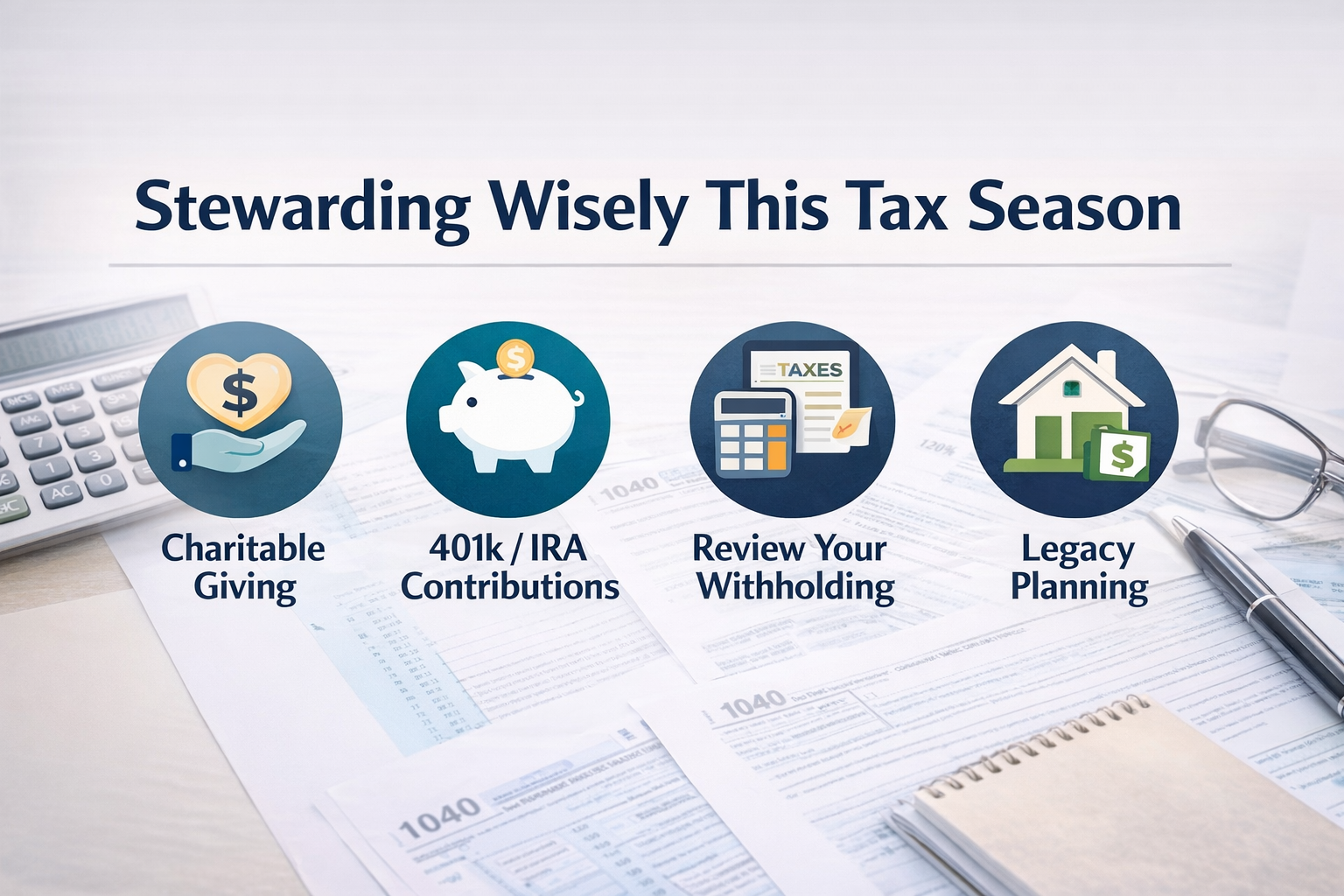
1. Charitable Giving
Giving is both a spiritual discipline and a financial strategy.
Thoughtful giving can support causes that matter to you, align your finances with your faith, and provide potential tax advantages
Strategic giving—such as donating appreciated assets or planning larger gifts—can increase both impact and efficiency.
2. Retirement Contributions
Contributing to retirement accounts not only prepares for the future but can also provide tax benefits today.
Options such as:
- Traditional IRAs
- 401(k)s
- Roth Accounts (for long-term planning)
can play a key role in balancing current tax responsibility with future growth.
3. Reviewing Your Withholding and Estimated Payments
Unexpected tax bills often come from misalignment throughout the year.
A simple review can prevent surprises, improve cash flow planning, and provide greater clarity moving forward.
4. Capital Gains Planning
Investment decisions can have tax implications.
Being intentional about the timing of sales, loss harvesting, and portfolio adjustments can help manage tax exposure without compromising long-term strategy.
5. Legacy and Estate Considerations
Tax planning is not only about the present—it also impacts what you leave behind.
Proper planning can reduce unnecessary tax burdens, protect family resources, and increase charitable impact.
This is where tax strategy and legacy planning intersect.
The Value of Proactive Planning
One of the most important principles in tax stewardship is timing.
Many tax decisions cannot be made after the year has ended. That is why proactive planning—throughout the year—is essential.
March is an ideal time to review last year’s outcomes, identify opportunities for improvement, and adjust strategies for the current year.
Tax season is not just about looking back. It is about planning forward.
Faithfulness in the Details
Jesus taught that faithfulness in small things leads to greater responsibility. Taxes may feel like a detail, but they are part of the broader stewardship picture.
Approaching this season with diligence, integrity, and wisdom allows you to honor your responsibilities, maximize what you keep, and increase your capacity to give and invest.
Faithfulness in stewardship creates opportunity.
Moving Forward with Clarity
As you navigate tax season this year, remember that you are not simply filing a return—you are managing a portion of what God has entrusted to you.
At Stewardship Advisory Group, we are here to help you think beyond the immediate deadline and build a plan that works throughout the year.
Because wise stewardship is not seasonal. It is consistent.
Yours for Faithful Stewardship,
Jeff Rogers, CEP®, CKA®
Founder & Chairman