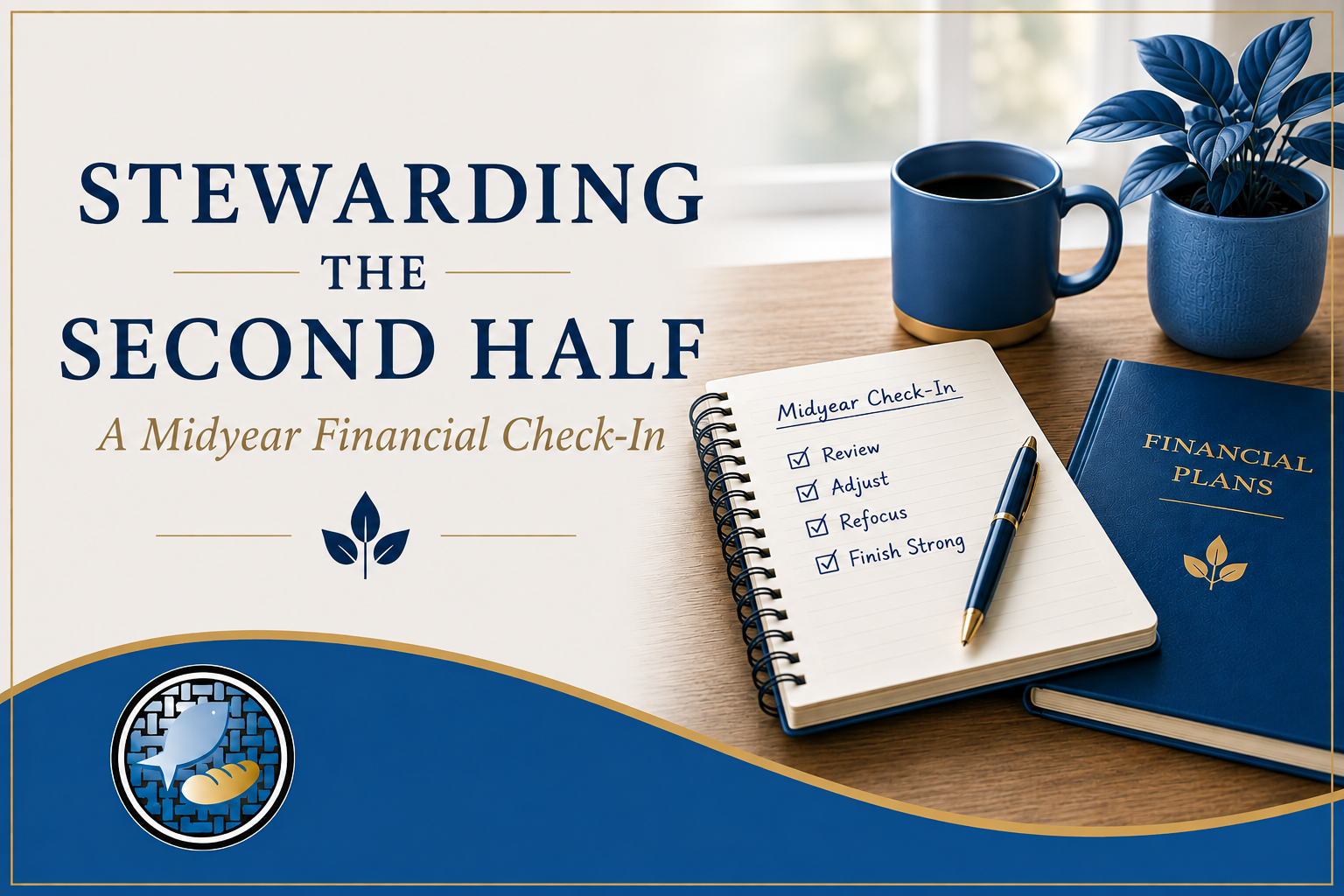
August has a way of bringing us back to routine.
Summer vacations begin winding down, school calendars fill up, and suddenly we realize that more than half of the year has already passed. The financial goals we set in January may feel surprisingly distant.
That makes August an excellent time to pause—not with regret over what hasn’t happened, but with wisdom about what still can.
At Stewardship Advisory Group, we believe good stewardship requires more than making a plan. It also means periodically looking at that plan, evaluating where you are, and making thoughtful adjustments along the way.
Stewardship Pays Attention
Proverbs 27:23 offers surprisingly practical financial wisdom:
“Be sure you know the condition of your flocks, give careful attention to your herds.”
In the ancient world, flocks and herds represented significant financial resources. Knowing their condition wasn’t simply good farming—it was wise stewardship.
The principle still applies. We can’t wisely steward what we’re unwilling to examine.
Sometimes financial avoidance comes from fear. We worry that looking closely might reveal that we’re behind on a goal, spending more than anticipated, or facing decisions we’d rather postpone.
But clarity isn’t something to fear. Clarity gives us the opportunity to respond wisely.
Look Back Before You Look Ahead
A midyear financial review begins by asking what has changed.
Perhaps income increased or decreased. Maybe an unexpected expense altered your savings plan. Your investment goals may have shifted, or retirement may suddenly feel much closer than it did at the beginning of the year.
Life rarely follows a financial plan perfectly. That’s why a good plan should provide direction without becoming rigid.
Rather than asking, “Did everything go according to plan?” a better question may be, “Does my plan still reflect where God has me today?”
That subtle shift moves us away from perfection and toward faithful stewardship.
Four Areas Worth Revisiting
As you move into the latter part of the year, consider taking a fresh look at four areas of your financial life: your spending and cash flow, progress toward savings and retirement goals, investment strategy and risk tolerance, and charitable giving.
You may discover that everything is moving exactly as intended. Or you may identify an area that needs attention.
Either result is valuable. The goal isn’t constant financial tinkering. It’s making sure your decisions remain aligned with your circumstances, priorities, and long-term goals.
Don’t Forget the “Why”
Financial planning can quickly become focused on numbers: How much have we saved? What return are we earning? When can we retire?
Those questions matter, but biblical stewardship invites us to ask something deeper: What are these resources for?
Money is not the destination. It is a tool God has entrusted to us.
Our resources allow us to care for our families, prepare wisely for the future, give generously, meet needs, and participate in work that matters to us.
When we remember the purpose behind our planning, financial decisions become less about accumulation and more about stewardship.
Small Adjustments Can Make a Big Difference
One encouraging thing about an August financial check-in is that there is still plenty of year left.
Perhaps you need to increase retirement contributions, rebuild emergency savings after an unexpected expense, revisit your giving goals, or simply become more intentional about spending.
You don’t have to overhaul everything. Sometimes one thoughtful adjustment made today can significantly affect where you are a year—or ten years—from now.
Faithfulness is often built through small decisions repeated consistently.
Finish the Year with Intention
January gets most of the attention when it comes to setting goals, but August may be an even better time to evaluate them. By now, you have several months of real-life information to work with.
So before the busyness of fall begins, take a little time to ask:
Where are we? What has changed? What needs attention? And are our financial decisions still aligned with what matters most?
At Stewardship Advisory Group, we believe financial planning is ultimately about helping you steward what God has entrusted to you with wisdom, confidence, and purpose.
You don’t need a perfect plan. You need an intentional one—and the willingness to adjust it faithfully along the way.
Yours for Faithful Stewardship,
Jeff Rogers, CEP®, CKA®